Reading Korean DART filings is one of the best ways to learn about KOSPI, KOSDAQ, and pre-IPO companies — at least if you can read Korean. As a Korean speaker this is a non-issue. Open the filing, skim the structured sections, decide if it matters.
In English it's a different story.
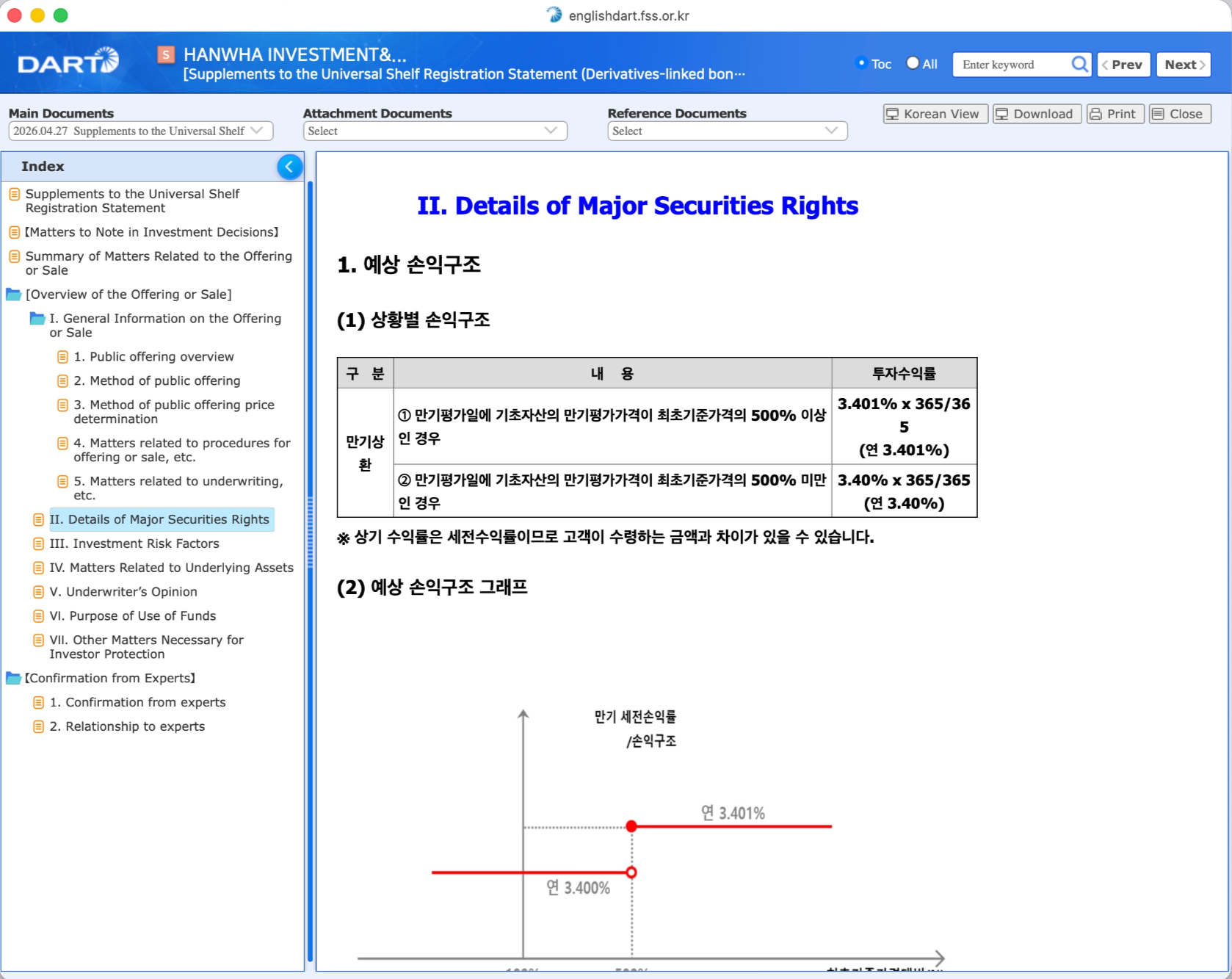
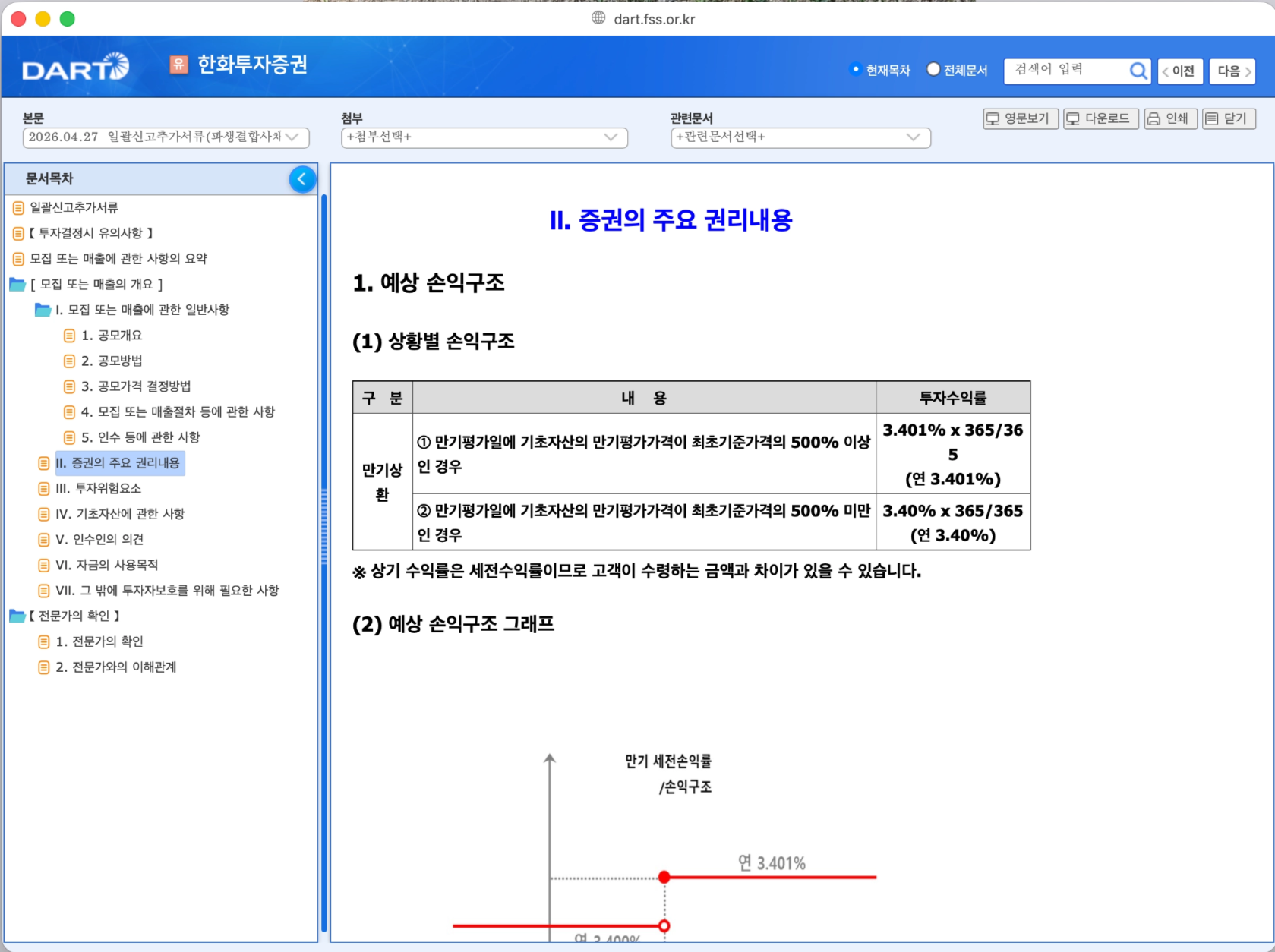
Top: English. Bottom: Korean. The translation goes about as far as the table of contents — most of the substance stays in Korean.
For a global analyst covering Korea from Hong Kong, Singapore, or London, the same workflow takes thirty minutes to two hours: wait for an English summary to appear on Bloomberg, ping a Korean-speaking colleague, or run the document through machine translation and hope the numbers survive.
This is a real information asymmetry, in a market that prices roughly two trillion dollars of equity. And unlike most asymmetries, it's not technically hard to close. The filings are public. They're already structured. The translation problem has been functionally solved by large language models. Someone just needs to glue it together.
So I built that glue.
The tech stack, parsing logic, and full source are on GitHub: github.com/junshin0922/DART_disclosure_brief · Live channel: t.me/disclosure_brief_korea